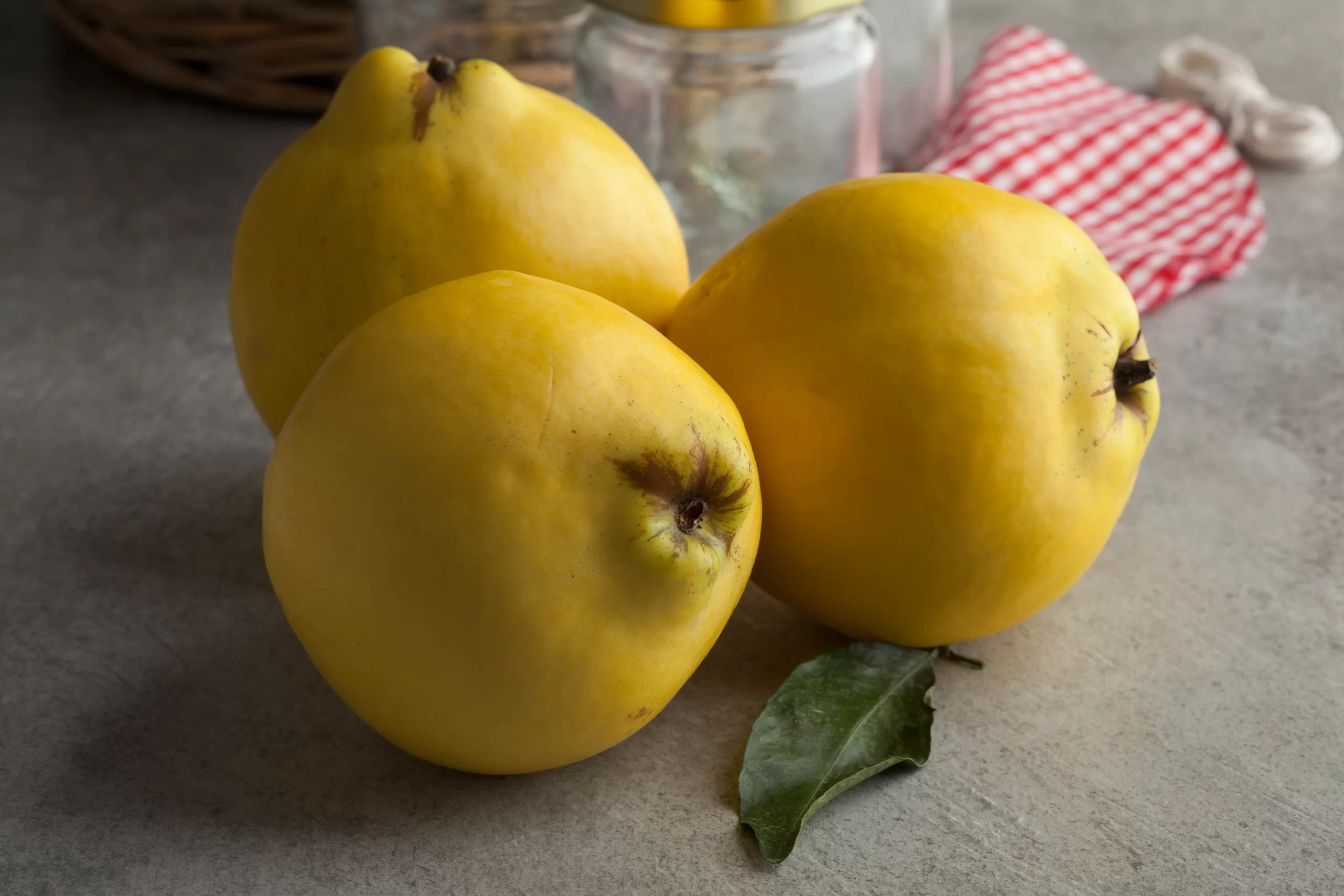
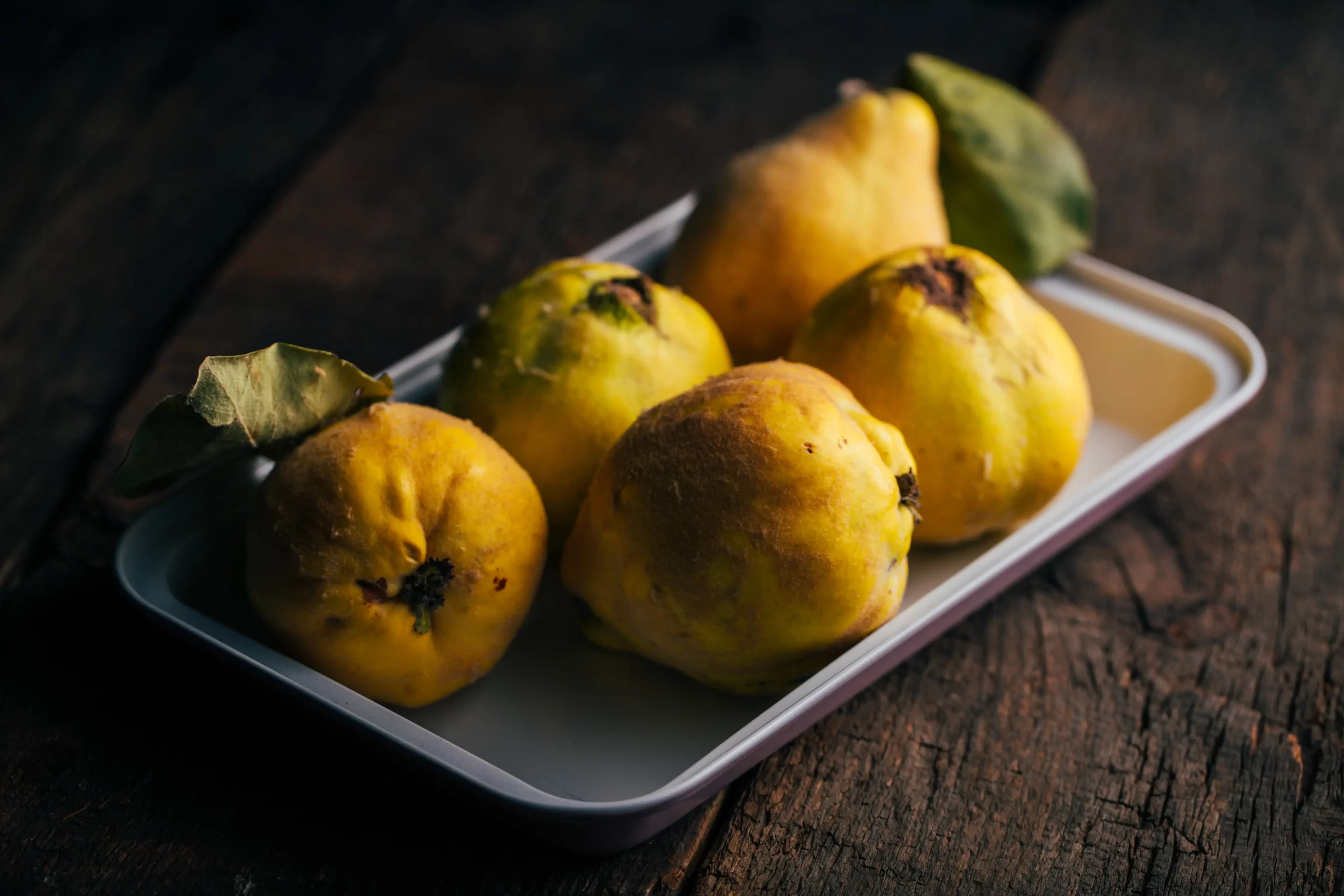
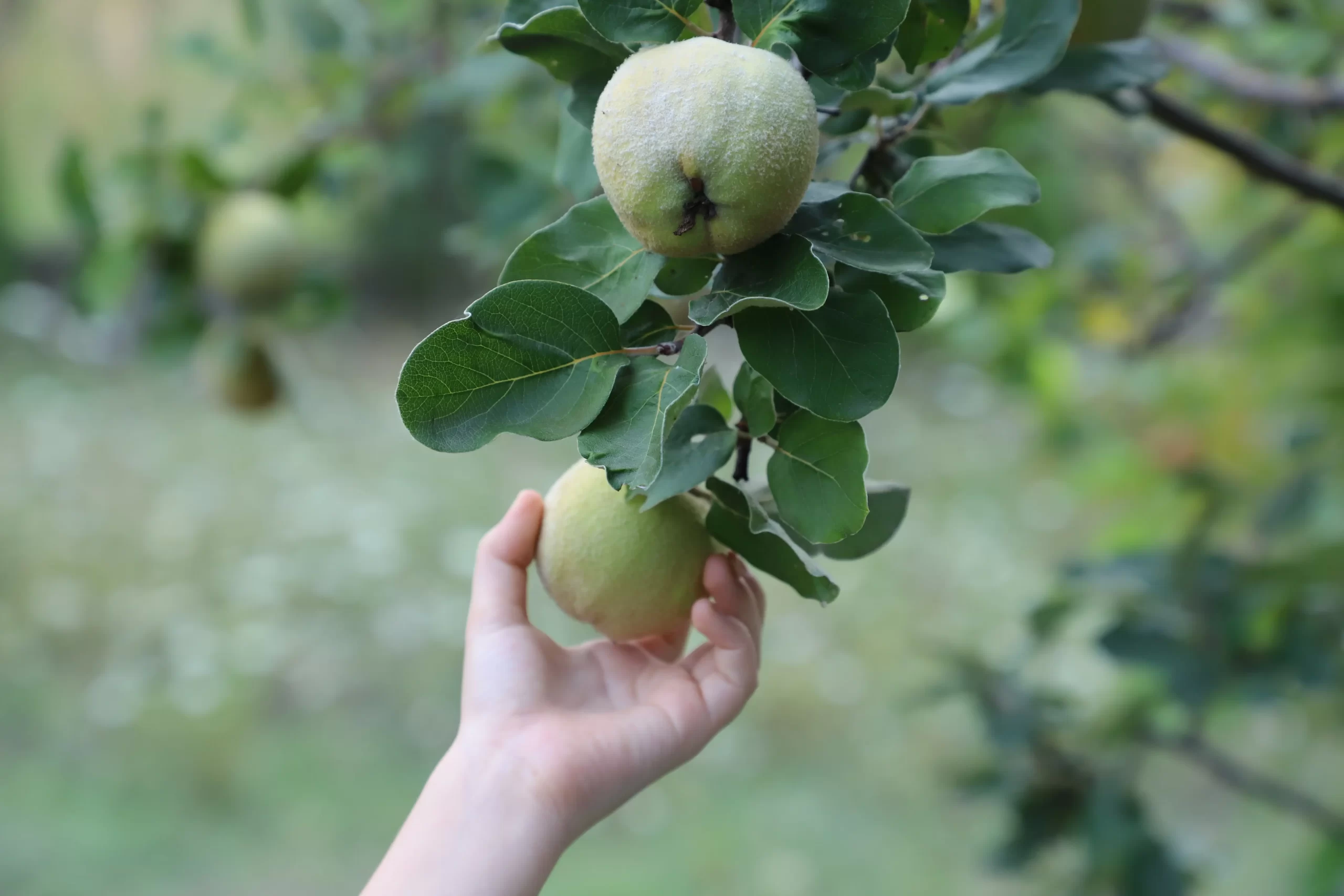
Turkey, which can produce one-fourth of the world’s quince production alone, is the first country in the world ranking. Quince is grown in the Mediterranean, Aegean and Central Black Sea regions of our country. It is a yellow colored, beautiful looking, fragrant and heavy fruit. Quince with hard skins and flesh; When eaten, it leaves a sour taste in the mouth. Its color varies from green to yellow and its taste is between apple and peach. Domestic varieties with high quality are exported. The export varieties in our country are as follows: Eşme: Most of the closed quince orchards in our country are established with this variety. In some regions, it is also called lemon quince because of its color. Its fruits are round, slightly elongated towards the stem, abundantly juicy and sour sweet. Bread: The fruit is large, the stem side is narrow, the abdomen is wide, the fruit flesh is crisp, juicy, tart and less hairy.
Eşme Quince
Eşme Quince is a quince variety grown in western Turkey, especially in Manisa. It is usually medium in size and regularly oval. Its bark is greenish yellow or yellowish green and its texture is quite soft. The fleshy part inside is white and quite sweet. Also, the seeds of Eşme Quince are quite small.
Esme Quince is usually consumed fresh, but can also be used to make marmalade and jam. Its production is quite common in the Manisa region and quince orchards are also important in terms of tourism.
Esme Quince is harvested in September and October in Turkey. Harvest time coincides with the time when the quince reaches full maturity and is very important for the flavor, aroma, and shape of the quince.
Ekmek Quince
Ekmek Quince is a quince variety grown in western Turkey, especially in Bursa. It got its name from its bread-like texture. Ekmek Quince can reach quite large sizes and its shape is regular, round, and oval. The bark is yellowish green, slightly hairy, and rather thin. The interior is white, fleshy, and very sweet. Also, the seeds of Ekmek Quince are quite large.
Ekmek Quince is consumed fresh and is widely used especially in dessert making. It is also preferred for making marmalade, jam, and compote. Its production is quite common in Bursa and it is known as a local flavor.